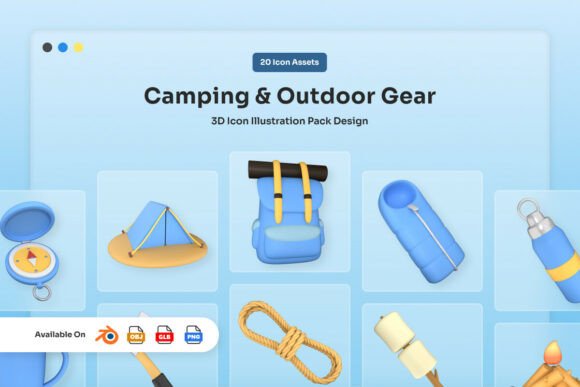
Modern Outdoor Explorer 3D Icons: A Practical Guide for Designers and Developers
In the rapidly evolving landscape of digital interface design, visual assets serve as more than mere decoration; they are functional tools that guide user behavior and establish brand identity. For projects centered around nature, travel, and outdoor activities, the choice of iconography can significantly influence how users perceive reliability and engagement. Modern Outdoor Explorer 3D Icons represents a specific approach to this challenge, offering a collection of assets designed to balance aesthetic appeal with technical utility. This article examines the characteristics of this pack, compares it to alternative visual styles, and helps designers determine if it aligns with their project requirements.
Defining the Aesthetic and Technical Foundation
The core appeal of the Modern Outdoor Explorer 3D Icons lies in its deliberate stylistic choices. Unlike flat vector icons, which have dominated web design for over a decade, these assets utilize three-dimensional forms to create depth and tactility. The design philosophy emphasizes clean, solid geometries with smooth edge softness. This is not merely an artistic preference but a functional decision. Sharp edges can sometimes appear aggressive or low-resolution on high-density displays, whereas softened edges contribute to a perception of quality and modernity.
Lighting plays a critical role in the effectiveness of any 3D asset. These icons employ balanced daylight lighting, which ensures that shadows are present enough to define form but not so harsh that they obscure details. This consistency is vital for maintaining clarity across different background colors and interface modes. Whether placed on a dark hiking dashboard or a light educational webpage, the icons retain their legibility. The high resolution of the provided PNG files, at 3000 x 3000 pixels, further supports this clarity, allowing for scaling without significant loss of quality in raster-based workflows.
Comparing 3D Icons to Flat and Line Styles
When evaluating visual resources, it is essential to understand where 3D icons fit within the broader spectrum of design trends. Flat design remains popular due to its simplicity and fast load times. It is ideal for data-heavy applications where minimalism reduces cognitive load. However, flat icons can sometimes feel generic or lack emotional resonance, particularly in industries like tourism and outdoor recreation, where the goal is to evoke a sense of adventure and immersion.
Line art icons offer another alternative, providing a lightweight and elegant look. They are excellent for sophisticated, minimalist brands but may struggle to convey the robustness associated with outdoor gear and exploration. In contrast, Modern Outdoor Explorer 3D Icons occupy a middle ground. They provide the visual weight and presence of 3D modeling while maintaining the cleanliness required for modern UI. This makes them particularly suitable for hero sections, feature highlights, and marketing materials where visual impact is prioritized over sheer information density.
The tradeoff, naturally, is file size and complexity. While the included PNGs are ready to use, integrating true 3D interactivity requires more development effort than implementing SVG vectors. Designers must weigh the enhanced visual engagement against potential performance considerations, especially for mobile-first applications with strict bandwidth constraints.
Versatility Across Digital Platforms
One of the strongest arguments for adopting this icon pack is its versatility. The geometric design ensures that the assets do not feel overly stylized or niche, allowing them to adapt to various contexts. For navigation tools, the clear forms help users quickly identify functions such as maps, compasses, or trail markers. In educational visuals, the tangible quality of the icons can make abstract concepts about ecology or geography more accessible to learners.
Consider a nature conservation app aiming to engage younger demographics. Traditional flat icons might fail to capture attention, whereas these 3D assets offer a playful yet professional aesthetic that resonates with contemporary digital natives. Similarly, for eco-friendly campaigns, the polished look of the icons lends credibility to the message, suggesting that the organization is modern, well-funded, and attentive to detail. The consistent proportions across all twenty assets ensure that when used together, they create a cohesive visual language rather than a disjointed collection of images.
Technical Workflow and Customization
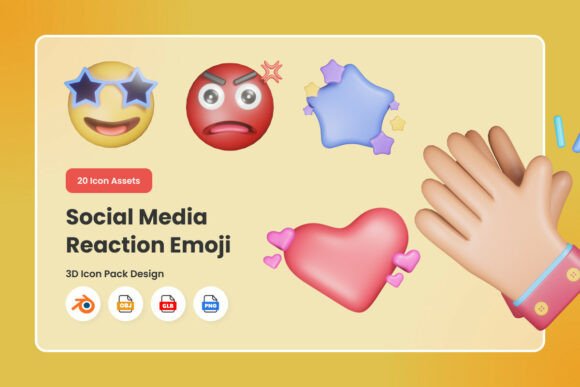
For designers who require more than just pre-rendered images, the inclusion of source files is a significant advantage. The pack provides Blender files, OBJ files, and GLB files, catering to different stages of the production pipeline. Blender users can directly access the scenes to adjust lighting, camera angles, or materials. This level of control is rare in standard icon packs and allows for deep customization. If a brand’s primary color is a specific shade of green not represented in the default renders, designers can modify the materials in Blender and re-render the assets to match perfectly.
The availability of OBJ and GLB formats also opens doors for web developers interested in implementing interactive 3D elements using libraries like Three.js or Spline. While this requires a higher technical skill set, it enables dynamic experiences where icons might rotate or react to user input. For those who prefer a simpler workflow, the high-resolution transparent PNGs offer a plug-and-play solution that integrates seamlessly into tools like Figma, Sketch, or Adobe Photoshop.
Evaluating Fit: When to Choose This Pack
Deciding whether Modern Outdoor Explorer 3D Icons is the right choice depends on specific project goals and constraints. This pack is an ideal fit for:
- Branding Projects: Companies launching new outdoor products or services that need a distinctive visual identity separate from the sea of flat design competitors.
- Marketing Materials: Social media graphics, email headers, and landing pages where visual appeal drives click-through rates.
- Educational Content: Interactive modules or presentations where engaging visuals help retain audience attention.
- Prototyping: Designers looking to add polish to high-fidelity prototypes before final development begins.
However, there are scenarios where alternative solutions might be more appropriate. If a project requires hundreds of unique icons covering a wide range of non-outdoor topics, a comprehensive vector library might be more cost-effective and consistent. Additionally, for applications where every kilobyte counts, such as progressive web apps for users with limited connectivity, optimized SVG icons remain the superior technical choice due to their scalability and small file size.
Limitations and Considerations
While the pack offers high-quality assets, it is important to acknowledge its limitations. With twenty unique assets, the scope is focused rather than exhaustive. Designers may need to supplement these icons with additional elements for less common functions. Furthermore, while the lighting is balanced for general use, it may not match the specific atmospheric conditions of every project. For instance, a night-mode interface might require darker, moodier renders that differ from the daylight aesthetic provided.
Another consideration is the learning curve associated with the 3D source files. Designers unfamiliar with Blender or 3D modeling principles may find themselves restricted to the pre-rendered PNGs. While this is sufficient for many use cases, it limits the ability to fully leverage the customizable nature of the product. Teams should assess their internal skills before committing to a workflow that relies heavily on 3D manipulation.
Making an Informed Decision
Selecting the right visual assets is a strategic decision that impacts both user experience and brand perception. Modern Outdoor Explorer 3D Icons offers a compelling blend of modern aesthetics and technical flexibility. It stands out by providing a polished, cohesive look that enhances storytelling in outdoor-themed projects. By understanding the tradeoffs between 3D depth and performance, and by recognizing the specific strengths of geometric, softly lit designs, designers can make informed choices.
Ultimately, the value of this pack lies in its ability to elevate standard interfaces into engaging visual experiences. For creatives seeking to differentiate their work in a crowded digital space, these icons provide a solid foundation. They invite users to explore, not just navigate, creating a subtle but powerful connection between the digital interface and the physical world of adventure. As with any design resource, the key is to align the tool with the project’s specific needs, ensuring that the visual style supports rather than distracts from the core functionality.