Mastering the 3d Inflated Always and Forever Mug Wrap for Professional Sublimation Workflows
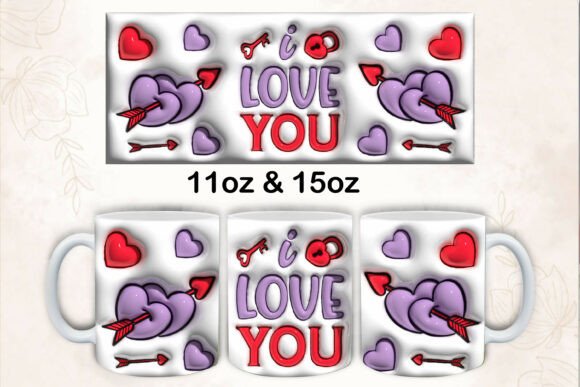
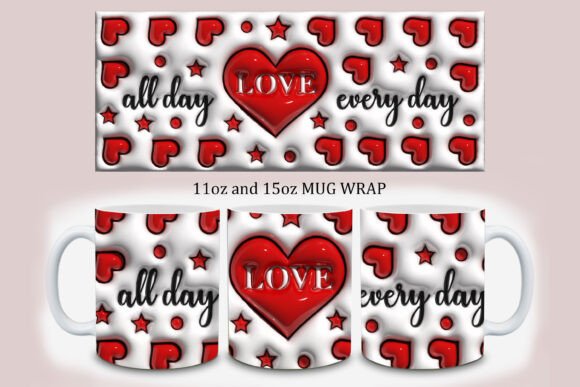
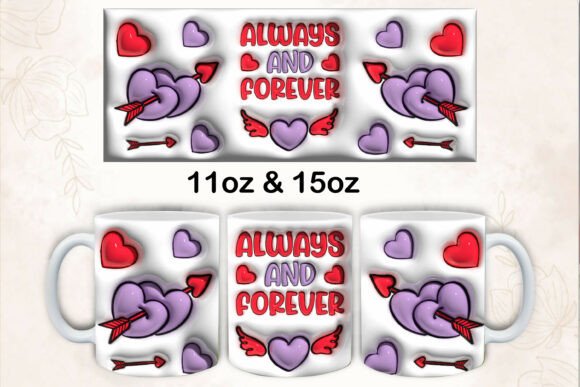
In the competitive landscape of custom merchandise, the difference between a generic product and a bestseller often lies in the details of design execution and technical precision. For creators, small business owners, and print-on-demand entrepreneurs, integrating high-quality assets like the 3d Inflated Always and Forever Mug Wrap into their production pipeline is not just about aesthetics; it is about establishing a reliable, efficient workflow that minimizes errors and maximizes output quality. This specific design asset, characterized by its tactile, balloon-like typography and romantic thematic elements, serves as an excellent case study for how digital files translate into physical products when handled with professional care.
Understanding where this asset fits within your broader creative and operational process is essential. It is not merely a image file to be dragged and dropped; it is a component of a larger system involving color management, substrate selection, and thermal transfer mechanics. By treating the 3d Valentine’s Day PNG Mug Design as a critical node in your manufacturing chain, you can ensure consistency across batches and reduce the friction often associated with custom printing tasks.
Technical Specifications and File Preparation
The foundation of any successful sublimation project is the source file. When you acquire the 3d Inflated Always and Forever Mug Wrap, you are receiving two distinct PNG files optimized for the most common straight mug sizes: the 11 oz and the 15 oz variants. The resolution is set at 300 DPI, which is the industry standard for crisp, professional-grade printing. However, possessing high-resolution files is only the first step in the preparation phase.
For the 11 oz straight mug, the dimensions are precisely 8.5 inches by 3.5 inches. For the 15 oz straight mug, the wrap measures 9 inches by 4 inches. These measurements are not arbitrary; they account for the curvature of the mug and the necessary overlap for seamless wrapping. Before sending these files to print, it is crucial to verify your design software settings. Whether you are using Adobe Photoshop, Illustrator, or specialized sublimation software, ensure that your canvas size matches these exact dimensions. Misalignment here can lead to white gaps or cut-off text, which are costly mistakes in a production environment.
Furthermore, because these are PNG files with transparent backgrounds, you have the flexibility to place the design over different base colors or patterns if you choose to customize further. However, for the intended effect of the inflated 3D look, maintaining the integrity of the original shading and highlights is vital. Avoid compressing the file further, as this can introduce artifacts that degrade the smooth gradients essential for the 3D illusion.
Color Management and Hardware Compatibility
One of the most significant challenges in sublimation printing is color fidelity. The note that "colors you see on your screen might differ from the final printed product" is not just a disclaimer; it is a fundamental reality of digital-to-physical translation. Monitors emit light, while prints reflect it. To mitigate this discrepancy, professionals must implement a rigorous color management strategy.
Start by calibrating your monitor. Using a hardware calibrator ensures that what you see is as close to standard color spaces as possible. Next, understand your printer’s ICC profile. Sublimation inks behave differently than standard CMYK inks, often appearing dull on paper before heat activation brings them to life. The vibrant reds and soft pastels in the 3d Valentine’s Day PNG Mug Design require precise ink saturation. If your colors appear washed out, check your printer head nozzles for clogs and ensure you are using high-quality sublimation paper that releases ink efficiently.
Compatibility extends beyond the printer. The mug itself must be polymer-coated to accept the sublimation dye. Standard ceramic mugs will not work. Ensure you are sourcing blanks that are specifically rated for sublimation. The interaction between the 3d Inflated Always and Forever Mug Wrap and the mug surface is chemical; the heat turns the ink into gas, which bonds with the polymer coating. Any inconsistency in the coating quality will result in patchy prints, regardless of how perfect your digital file is.
Integration into Production Workflows
Integrating this design into your daily operations requires a structured approach. For small business owners and freelancers, time is a finite resource. Automating the prep stage can save hours per week. Consider creating templates in your design software that already have the 8.5″ x 3.5″ and 9″ x 4″ canvases set up. When an order comes in, you simply import the PNG, check the alignment, and send it to print. This reduces decision fatigue and minimizes the risk of human error.
During the printing phase, organization is key. Label your printed sublimation papers clearly, especially if you are running batch jobs for both 11 oz and 15 oz mugs. Mixing up the sizes is a common mistake that leads to wasted materials. Use heat-resistant tape to secure the paper to the mug, ensuring it is tight and wrinkle-free. Any air bubbles under the paper will prevent the ink from transferring, resulting in white spots on the final product.
The pressing process is where the magic happens, but it is also where precision is paramount. Follow the recommended time and temperature settings for your specific heat press and mug blanks. Typically, this ranges from 380°F to 400°F for 180 to 200 seconds. However, these variables can shift based on ambient temperature and the specific brand of your equipment. Conduct test runs with the 3d Inflated Always and Forever Mug Wrap to dial in the perfect settings for your setup. Document these settings in a standard operating procedure (SOP) so that any team member can replicate the results consistently.
Quality Control and Long-Term Value
After pressing, allow the mug to cool completely before removing the paper. Peeling the paper while hot can cause smudging or ghosting. Once cooled, inspect the mug under good lighting. Look for clarity in the text, vibrancy in the colors, and absence of white specks. The 3D inflated effect should look smooth and continuous, not pixelated or broken.
From a business perspective, offering a design like the 3d Valentine’s Day PNG Mug Design adds value to your catalog because it is ready-to-print. It eliminates the need for hiring a graphic designer for each seasonal update. This efficiency allows you to focus on marketing, customer service, and expanding your product line. Moreover, high-quality, emotionally resonant designs tend to have higher perceived value, allowing for better profit margins.
Long-term use of such assets also depends on proper storage and version control. Keep your original PNG files backed up in multiple locations. As trends evolve, you may want to tweak the design or combine it with other elements. Having the high-resolution source files ensures you can adapt without losing quality.
Strategic Application for Marketers and Creators
For marketers and content creators, this mug wrap is more than a product; it is a content opportunity. The visual appeal of the 3D inflated text makes it highly shareable on social media platforms like Instagram and Pinterest. Use the production process as behind-the-scenes content to engage your audience. Show the transformation from digital file to physical product. This transparency builds trust and showcases your commitment to quality.
Educators and hobbyists can also benefit from this asset by using it as a teaching tool for sublimation techniques. It provides a clear example of how resolution, color profiles, and heat settings interact. By mastering this specific design, learners can gain confidence to tackle more complex projects.
In conclusion, the 3d Inflated Always and Forever Mug Wrap is a versatile, high-quality asset that, when integrated thoughtfully into your workflow, can enhance both your productivity and your product offerings. By paying attention to technical details, maintaining rigorous quality control, and understanding the broader context of your production process, you can deliver exceptional results that resonate with customers and stand the test of time. Whether you are scaling a business or refining a hobby, the principles of preparation, compatibility, and consistency remain the pillars of success in sublimation printing.