Integrating 3D Sublimation Tumbler Wrap Mountain Designs into Your Creative Workflow
In the evolving landscape of custom merchandise and digital design, the 3d Sublimation Tumbler Wrap mountain represents more than just a static image; it is a critical asset in a broader production pipeline. For professionals ranging from small business owners to freelance graphic designers, understanding how to effectively implement these specific nature-themed designs can significantly streamline operations. The process involves more than simply downloading a file; it requires a strategic approach to preparation, compatibility checks, and quality control to ensure the final physical product meets high standards.
This article explores the practical integration of Japanese landscape-inspired tumbler wraps into your daily workflow. We will examine how these assets fit into pre-production planning, execution during the printing phase, and post-production quality assurance. By treating the design file as a component of a larger system, you can reduce errors, enhance efficiency, and deliver superior results to your clients or customers.
Understanding the Asset Specifications and Requirements
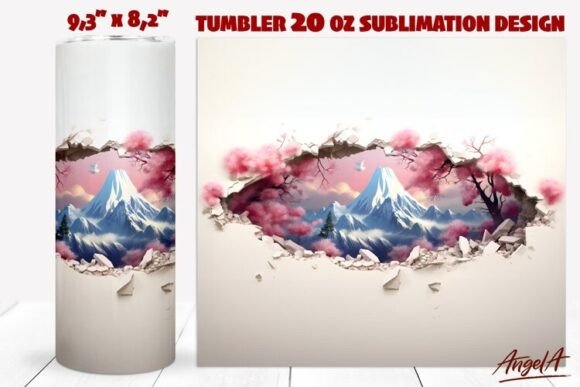
Before initiating any project involving a 3d Sublimation Tumbler Wrap mountain, it is essential to thoroughly understand the technical specifications provided. In this context, the asset is a PNG file with a striped background, rendered at 300 DPI, with dimensions of 9.3 by 8.2 inches. The background is not transparent, which is a crucial detail for sublimation printing workflows.
The inclusion of a striped background often serves as a visual guide for alignment or indicates areas that may need trimming or specific handling during the wrapping process. For creators, recognizing that the file is not transparent means you must account for the full rectangular area during the heat press stage. Ignoring these details can lead to misalignment or unwanted white spaces on the final 20 oz tumbler. Therefore, the first step in your workflow should always be a technical audit of the digital asset to ensure it matches your hardware capabilities and material requirements.
Pre-Production Planning and Compatibility Checks
Effective use of a 3d Sublimation Tumbler Wrap mountain begins long before the printer starts running. During the planning phase, you must verify that your design software and hardware are compatible with the file format and resolution. Since the file is a high-resolution PNG at 300 DPI, it is suitable for professional-grade sublimation printers. However, ensuring your color profile settings match the printer’s output is vital for maintaining the integrity of the Japanese landscape illustration, particularly the subtle gradients of the sakura pink flowers and the depth of the mountain ranges.
- Software Preparation: Open the PNG in your preferred design tool to check layers and dimensions. Ensure the canvas size matches the 9.3 x 8.2 inch specification to prevent accidental scaling.
- Hardware Calibration: Verify that your sublimation printer is calibrated for vibrant color reproduction. The pink hues of the cherry blossoms and the earthy tones of the broken wall require precise ink density.
- Material Selection: Confirm that your 20 oz tumblers are coated for sublimation. The wrap must adhere properly to the curved surface without distortion.
By addressing these factors early, you minimize the risk of costly reprints and material waste. This proactive approach aligns with best practices in resource management and operational efficiency.
Execution: Integrating the Design into the Printing Process
Once the preparatory steps are complete, the focus shifts to the execution phase. Here, the 3d Sublimation Tumbler Wrap mountain transitions from a digital file to a physical transfer. The process requires precision and attention to detail. Start by printing the design onto sublimation paper, ensuring that the printer settings are optimized for high-quality image transfer. Pay close attention to the orientation of the image, especially given the complex composition of mountains, sakura trees, and the broken wall.
After printing, allow the ink to dry completely to prevent smudging. Next, carefully wrap the sublimation paper around the 20 oz tumbler. Because the background is not transparent, you must ensure that the edges align perfectly to avoid visible seams. Use heat-resistant tape to secure the paper, making sure it is tight but not so tight that it causes wrinkles. Wrinkles can distort the mountain illustration, breaking the visual continuity of the landscape.
During the heat press stage, monitor temperature and time closely. Sublimation requires specific heat levels to convert the solid ink into gas, which then bonds with the polymer coating on the tumbler. Deviating from recommended settings can result in faded colors or blurry details, compromising the aesthetic appeal of the sakura pink flowers and the rugged texture of the mountains.
Quality Control and Post-Production Evaluation
The final stage of the workflow involves rigorous quality control. After the tumbler has cooled and the paper is removed, inspect the product for any defects. Look for signs of ghosting, uneven color distribution, or misalignment. A well-executed 3d Sublimation Tumbler Wrap mountain should display sharp details in the Japanese landscape, with vibrant sakura blossoms standing out against the muted tones of the broken wall and mountains.
If issues arise, document them for future reference. Did the colors appear washed out? Was there a shift in the image alignment? These observations can help refine your process for subsequent projects. For instance, if the pink hues are consistently dull, you may need to adjust your color profile or ink levels. If alignment is off, consider creating a template or jig to standardize the wrapping process.
Additionally, consider the durability of the final product. Test the tumbler for resistance to scratching and fading. High-quality sublimation should result in a permanent bond that withstands regular use and washing. This step is crucial for maintaining customer satisfaction and building a reputation for reliability.
Long-Term Use and Workflow Optimization
Integrating 3d Sublimation Tumbler Wrap mountain designs into your routine offers opportunities for long-term workflow optimization. As you become more familiar with the specific requirements of these nature-themed wraps, you can develop standardized procedures that reduce setup time and increase throughput. Create checklists for each stage of the process, from file verification to final inspection, to ensure consistency across all products.
Furthermore, consider how these assets can be leveraged in marketing and sales. The unique combination of Japanese landscapes, mountains, and sakura flowers appeals to a specific aesthetic preference. Highlighting the artistic value and technical quality of your tumblers can differentiate your brand in a crowded market. Use high-resolution images of the finished products in your online stores and social media channels to showcase the intricate details of the design.
Collaboration is another key aspect of long-term success. If you work with a team, ensure that everyone understands the workflow and quality standards. Share insights and best practices to foster a culture of continuous improvement. If you encounter persistent challenges, do not hesitate to seek support. As noted in the asset description, if you have any problems, dropping a message can provide the assistance needed to resolve issues quickly.
Conclusion
The 3d Sublimation Tumbler Wrap mountain is a versatile and visually striking asset that, when integrated correctly, can enhance your creative output and business efficiency. By focusing on preparation, precise execution, and thorough quality control, you can produce high-quality tumblers that meet the expectations of discerning customers. Remember that successful implementation relies on attention to detail, from understanding file specifications to mastering the heat press technique. With a structured approach and a commitment to excellence, you can make these nature-inspired designs a staple of your product lineup, driving both creativity and commercial success.